

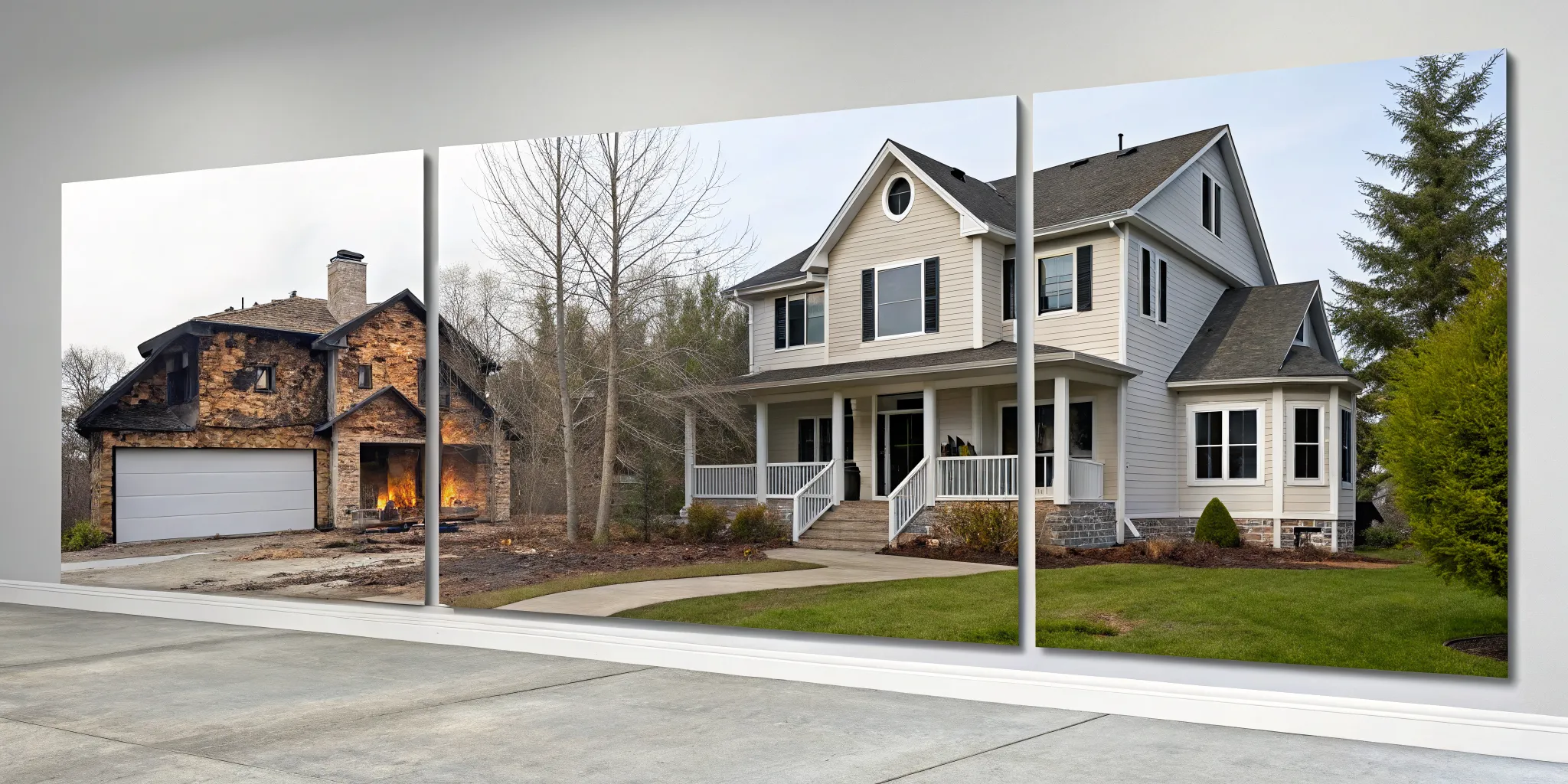
The emotional attachment to a home is strong, and the first instinct after a fire is often to restore it, no matter the cost. But rebuilding your life doesn’t have to mean rebuilding your house. A major restoration project is a long, demanding commitment that can stretch on for months or even years, often filled with stress and unforeseen setbacks. Before you commit to that journey, it’s crucial to explore all the options for a house with fire damage. Selling your property as-is offers a clean break, allowing you to bypass the headaches of construction and insurance negotiations and start fresh on your own terms, with cash in hand.
Key Takeaways
- Focus on safety and documentation first: Before you do anything else, wait for official clearance to re-enter your home. Once inside, take extensive photos of all the damage for your insurance claim before moving or cleaning a single item.
- Look beyond the visible damage: The real problems after a fire are often hidden. Issues like weakened structural beams, melted wiring, and toxic soot require a professional fire damage inspection to uncover the true cost and safety risks.
- Weigh your options carefully, including selling as-is: Repairing a fire-damaged home is a long and expensive process that is not right for everyone. Selling your property in its current condition to a cash buyer lets you bypass the stress of construction and insurance, giving you a clear and simple way to move forward.
Your First Steps After a House Fire
Dealing with the aftermath of a house fire is incredibly overwhelming, and it’s hard to know where to even begin. Before you think about repairs or long-term plans, focus on these three immediate actions. Taking these steps will protect your safety and your financial interests as you figure out what comes next.
Put Safety First
Your safety, and your family’s, is the absolute priority. Do not re-enter your home until the fire department has officially declared it safe. Even after the flames are out, serious dangers remain. Burned materials like plastics, carpets, and wood can release toxic chemicals into the air. There’s also the risk of structural damage that isn’t immediately obvious, making floors, ceilings, and walls unstable. Please, wait for the professionals to give you the all-clear before you even think about going back inside to assess the damage yourself.
Document the Damage (Before Touching Anything)
Once you have permission to enter the property, your first instinct might be to start sorting through things. Instead, stop and pull out your phone. Before you touch or move a single item, document everything. Take extensive photos and videos of the damage in every room from multiple angles. Capture wide shots of the rooms and close-ups of specific damaged items. This visual record is critical evidence for your insurance claim. A detailed inventory will make the claims process much smoother and help ensure you get a fair assessment.
Call Your Insurance Company
As soon as you are in a safe place, call your insurance agent to report the fire. This phone call officially starts the claims process. Most standard homeowners insurance policies cover fire damage to both the structure of your home and your personal belongings. Your agent will explain the next steps, including sending out an adjuster to evaluate the property. Be prepared to share the photos and videos you took. Understanding your homeowners insurance policy is key, so ask your agent for a copy and review what is covered for temporary housing, property replacement, and structural repairs.
Understanding the Full Extent of the Damage
After a fire, it’s natural to want to assess the damage and figure out what’s next. But what you can see with your own eyes is often just the beginning of the story. The flames, smoke, and even the water used to put out the fire can cause widespread issues that aren’t immediately obvious. Understanding the true scope of the damage is the most critical step you can take before deciding whether to repair, rebuild, or sell your property.
The visible destruction, like charred walls and burned furniture, is heartbreaking enough. However, hidden problems often pose the biggest financial and structural risks. Beyond that, the invisible toxins left behind in smoke and soot can create serious health hazards for anyone entering the home. Getting a complete picture requires a professional eye. Before you make any long-term decisions, you need a clear, comprehensive understanding of the structural, environmental, and financial reality of your home’s condition. This knowledge will empower you to choose the path that makes the most sense for you and your family.
Visible vs. Hidden Damage
The most shocking damage is what you see right away: blackened walls, collapsed ceilings, and destroyed belongings. It’s easy to focus on these areas, but the most dangerous and expensive problems often lurk out of sight. The intense heat from a fire can compromise your home’s entire structure, weakening wooden beams, warping steel supports, and cracking the foundation. These are not issues you can spot during a quick walkthrough.
Furthermore, your home’s essential systems are likely affected. Electrical wiring can melt inside the walls, creating a future fire hazard, while plumbing pipes can warp and leak, leading to water damage and mold. What might look like a straightforward repair job can quickly become a full-blown gut renovation once these hidden structural issues are uncovered, sending costs far beyond your initial estimates.
Health Risks: Smoke, Soot, and More
Even after the fire is out, your home can remain a hazardous environment. Smoke and soot don’t just stain surfaces; they are made of toxic particles from burned materials like plastics, textiles, and treated wood. These fine particles get everywhere, settling deep into drywall, insulation, and ventilation systems. Breathing them in can cause respiratory issues and other serious health problems long after the fire.
Water damage is another major concern. The massive amount of water used to extinguish the flames can soak into your home’s structure, creating the perfect breeding ground for mold. Mold can begin to grow within 24 to 48 hours and can also lead to significant health risks if not properly remediated. A thorough, professional cleaning is necessary to ensure the home is safe to occupy again, as simply painting over soot-stained walls won’t eliminate the underlying dangers left behind after a fire.
Why You Need a Professional Inspection
Given the hidden structural risks and invisible health hazards, a professional inspection is non-negotiable. A standard home inspector won’t do; you need a certified expert with experience in fire damage assessment. They have the training and tools to evaluate everything from air quality and hazardous materials (like asbestos exposed by the fire) to the integrity of your foundation, roof, and electrical systems.
This detailed inspection gives you a complete and unbiased report on your home’s condition. It’s the only way to truly understand the full extent of the damage and get a realistic estimate of repair costs. This report is also crucial for your insurance claim. At Peak Real Estate Solutions, our process always starts with a thorough, no-obligation assessment, so you have all the facts before making a decision. Understanding how we buy houses can give you a clear idea of what to expect from a professional evaluation.
Your Options for a Fire-Damaged House
After the initial shock of a house fire wears off, you’re left facing a major decision: what comes next for your property? It’s a heavy question, and there’s no single right answer. The path you choose will depend on your finances, your emotional energy, and your timeline for moving forward. It’s completely normal to feel overwhelmed, so let’s break down the three main paths you can take.
First, you could choose to repair and restore the home, fixing the damage and bringing it back to its former state. Second, if the damage is too extensive, you might consider rebuilding from the ground up, using the existing foundation if possible. Both of these options involve a significant investment of time, money, and effort.
The third option is to sell the house as-is. This path allows you to bypass the stress of construction projects and insurance negotiations entirely. You can sell the property in its current condition, take the cash, and start fresh somewhere new. Each option has its own set of pros and cons, and what works for one person might not be right for you. Let’s look at each one more closely.
Option 1: Repair and Restore
For many homeowners, the first instinct is to repair the damage. In most cases, a fire-damaged home can be saved, but it’s rarely a simple fix. The process is often a long and complex construction project that requires professional help. Before you do anything, you’ll need a structural engineer to inspect the property and determine if the home’s core is safe.
The cost of repairs can vary dramatically, with averages running from a few thousand dollars to over $28,000 for a full fire repair. This doesn’t even account for hidden issues that may appear once work begins. You’ll be managing contractors, dealing with permits, and living in a construction zone for months. This path is for those who have the time, budget, and emotional stamina for a major renovation.
Option 2: Rebuild from Scratch
If the fire was severe, repairing the existing structure might not be feasible. In this case, rebuilding may be your best bet. This doesn’t always mean a complete teardown. Often, a new home can be built on the old foundation, which can save you time and money, especially with support from your insurance provider.
Rebuilding gives you the chance to create a new home exactly to your liking, but it’s a massive undertaking. You’ll essentially be managing the construction of a new house from start to finish. While it can sometimes be cheaper than a complex restoration that requires bringing an older home up to modern building codes, it’s still a long and demanding process. This option is for those who are prepared to oversee a major construction project and want a completely fresh start on their current property.
Option 3: Sell Your House As-Is
If the thought of repairs or rebuilding feels completely overwhelming, you have another choice: you can sell your house exactly as it is. This option lets you walk away from the stress and uncertainty. You don’t have to clean up, make repairs, or even deal with your insurance company. You can simply sell the property and move on.
Finding a traditional buyer for a fire-damaged home is tough, as most people are scared off by the unknown costs and work involved. That’s where a cash home buyer can help. We specialize in properties just like yours. Our process is simple: we assess the damage and give you a fair, no-obligation cash offer. You get to choose your closing date, get cash in hand, and start your next chapter without the burden of a damaged home.
Can You Really Repair a Fire-Damaged Home?
After the shock of a house fire, the first question on your mind is probably, “Can my home be saved?” The technical answer is almost always yes, but the more important question is whether it’s truly worth it. Repairing a fire-damaged home is a massive undertaking that goes far beyond cosmetic fixes. It’s a complicated balance of cost, time, and safety. Before you commit to a long and expensive restoration project, it’s critical to understand what’s realistically possible, what the common pitfalls are, and what the process actually involves.
This decision carries a heavy emotional and financial weight. While your insurance payout provides a starting point, it may not cover the full scope of work, especially if there are hidden issues or required code upgrades. You have to consider not just the money but also the months, or even years, you might spend managing contractors, dealing with permits, and living in temporary housing. For many homeowners, the stress and uncertainty of a major restoration project are simply too much to handle on top of everything else. This section will help you look at the situation clearly so you can make the best choice for you and your family.
What Can Be Fixed? (Minor to Moderate Damage)
If the fire was small and contained to a single area, like a kitchen or one bedroom, repairs are generally much more straightforward. In these cases, the structural integrity of your home is likely intact. The restoration process might involve replacing drywall, flooring, and cabinets, as well as repainting and deep cleaning. However, even small fires create significant smoke and soot, which can travel throughout your entire home and settle into porous materials. Professional smoke remediation is essential to remove lingering odors and harmful residues. While manageable, this is still a job for experienced contractors, not a simple DIY project, and the costs can add up quickly.
When Is Damage Too Severe to Repair?
A house may be too damaged to repair if the fire compromised its core structure. If flames have weakened foundational elements, load-bearing walls, or the roof trusses, the home could be deemed unsafe by inspectors. In these situations, the cost and complexity of shoring up the structure can be astronomical. Beyond structural issues, severe fires leave behind a cocktail of toxic chemicals from burned plastics, carpets, and treated wood. These hazardous materials can permeate every surface, making the home a long-term health risk even after extensive cleaning. When faced with this level of damage, rebuilding or selling becomes a much more practical path forward.
Common Myths About Fire Damage Repair
One of the biggest myths is that repairing a fire-damaged home is always cheaper than tearing it down and starting over. While this can be true for minor incidents, it’s often not the case for extensive damage. A full restoration can feel like a financial black hole, with costs piling up for demolition, structural repairs, and specialized cleaning. Anything is possible with enough money, but it’s not always a wise investment. You might spend a fortune restoring a house only to find its market value doesn’t reflect your total expense. It’s important to weigh the guaranteed cost of repairs against the certainty of a fresh start.
What to Expect: Permits, Codes, and Timelines
Rebuilding any part of a home requires permits, and fire restoration is no exception. Your local municipality will need to approve the work to ensure it meets current safety standards. This is a key point: repairs must often comply with today’s building codes, not the codes from when your home was first built. This can trigger expensive, mandatory upgrades to your electrical, plumbing, and structural systems. The timeline is another major factor. Depending on the damage and contractor availability, the process can take many months or even years. This long, uncertain road is a stark contrast to a simple, direct sale where you can move forward on your own timeline.
What Does It Really Cost to Repair Fire Damage?
After a fire, the first question on every homeowner’s mind is, “How much will this cost to fix?” The answer is complicated because no two fires are the same. The final bill depends on the extent of the flames, the amount of smoke and soot, and the water damage left behind by firefighting efforts. While national averages suggest a fire repair can cost anywhere from a few thousand dollars to nearly $30,000, this is just a starting point. A small, contained kitchen fire might be on the lower end, but significant damage affecting your home’s structure or essential systems can easily climb to $50,000 or more.
Understanding these potential costs is the first step in deciding your path forward. You’ll need to weigh the price of repairs against your insurance coverage, your personal finances, and your willingness to manage a long and often stressful reconstruction project. This isn’t just about the money; it’s about the time and emotional energy required to get your home back to what it was. For many, the uncertainty and mounting expenses make a traditional repair overwhelming. Exploring a simpler alternative, like a direct cash sale, can provide a clear, guaranteed solution without the headaches of contractors and hidden fees. Our process is designed to give you certainty when you need it most.
Repair Costs by Damage Level
To get a clearer picture of what you might be facing, it helps to break down costs by the level of damage. For a minor fire that was extinguished quickly, you might be looking at around $3,000 to $5,000. This typically covers professional smoke and soot removal, cleaning services, and some cosmetic work like repainting.
If the damage is more moderate, involving burned drywall, flooring, or cabinets, the costs will rise. This is where you’ll see expenses fall into the average range of about $13,000. For major fires that compromise your home’s roof, foundation, or an entire room like the kitchen, the cost can easily exceed $50,000. These large-scale projects require structural engineers, architects, and extensive labor, making them a significant financial undertaking.
The Hidden Costs of Fire Damage Repair
One of the biggest challenges with fire damage is that what you see is rarely the full story. The initial estimate from a contractor often doesn’t account for the problems lurking behind your walls. Fire can weaken structural supports in ways that aren’t immediately obvious, and this hidden damage can dramatically increase repair costs down the line.
Beyond the structure, you also have to consider issues like mold growth from the water used to put out the fire, which requires specialized remediation. Your entire HVAC system may be contaminated with soot and need replacement. Electrical wiring is often compromised and must be completely redone to ensure safety. These unexpected expenses add up quickly, turning a manageable project into a financial burden that can stretch on for months.
Repair vs. Rebuild: A Financial Breakdown
When damage is severe, you might face the choice between repairing your home or rebuilding it. Surprisingly, it can be more cost-effective to rebuild on the existing foundation rather than tearing everything down and starting from scratch. This is because a total teardown often requires you to bring the new structure entirely up to modern building codes, which can be a lengthy and expensive process. A repair or partial rebuild may allow you to be grandfathered in on some older codes.
However, just because a home can be repaired doesn’t always mean it should be. The more important question is whether it’s worth the investment of time, money, and energy. If your insurance payout falls short or you simply don’t want to oversee a massive construction project, the financial and emotional cost may be too high. You can find answers to common questions about selling damaged homes on our FAQ page.
How to Pay for Fire Damage Repairs
After a fire, the question of “how” to pay for repairs is often just as stressful as the damage itself. The costs can be staggering, and figuring out where the money will come from feels like a monumental task. The good news is that you have several avenues to explore for funding the restoration of your home. Most homeowners start with their insurance policy, but there are also specialized loans, private financing, and even grants that can help bridge the financial gap. Each of these paths comes with its own set of rules and processes that can feel like a full-time job to manage, especially when you’re already dealing with so much.
Understanding your options is the first step toward making a clear-headed decision. Each path has its own set of requirements, timelines, and potential challenges. For some, managing the complex world of insurance claims and loan applications is a manageable process. For others, the time, effort, and uncertainty involved make these routes feel overwhelming. It’s important to be realistic about what each option entails, from gathering endless paperwork for a loan to waiting months for an insurance payout. Let’s walk through the most common ways to finance fire damage repairs so you can see what might work for your situation and what kind of commitment each one requires.
Using Your Homeowners Insurance
Your homeowners insurance policy is your first line of financial defense. Most standard policies are designed to cover damage from a fire, including repairs to the structure of your home and the replacement of your personal belongings. The first thing you should do is contact your insurance agent and start the claims process. They will send an adjuster to assess the damage and determine the scope of the coverage.
It’s a good idea to review your policy carefully to understand your coverage limits, deductibles, and any exclusions. The claims process can be long and requires detailed documentation, so be prepared to keep meticulous records. Working with a reputable restoration company can also be a huge help, as they can often coordinate directly with your insurance adjuster to ensure all necessary repairs are accounted for and properly quoted, taking some of the pressure off you.
Tapping into Renovation Loans
If your insurance payout doesn’t cover the full cost of repairs or if you want to make additional upgrades, a renovation loan might be a good option. Unlike a standard mortgage, these loans are specifically designed for properties that need significant work. Two of the most common types are the FHA 203(k) loan and the Fannie Mae HomeStyle loan. These financial tools allow you to bundle the cost of repairs and your remaining mortgage into one new loan.
This can be a practical solution, but it’s not a simple one. To qualify, you’ll need detailed bids from contractors, a comprehensive plan for the repairs, and multiple appraisals. The lender will also be heavily involved throughout the renovation process to ensure the work is completed to standard. This path requires a lot of coordination and paperwork, which can add more time and stress to your recovery.
Exploring Home Equity and Private Loans
If you have significant equity in your home, you might be able to use it to fund repairs through a home equity loan or a home equity line of credit (HELOC). This allows you to borrow against the value you’ve already built up in your property. However, if the fire damage is extensive, the bank may be hesitant to lend against a damaged asset, or they may lower the amount you’re able to borrow.
Another route is seeking out private or hard money loans. Some lenders specialize in financing damaged homes, but this often comes at a cost. These loans typically have much higher interest rates and shorter repayment periods than traditional loans. They are often used as a short-term bridge to get repairs done quickly before refinancing into a more conventional mortgage, but they carry a higher level of financial risk.
Finding Grants and Assistance Programs
Depending on your situation, you may qualify for grants or other forms of assistance. National organizations like the American Red Cross can provide immediate help with temporary housing, food, and clothing. If the fire was part of a larger event declared a natural disaster, you might be eligible for a grant from the Federal Emergency Management Agency (FEMA). These funds are meant to help with essential repairs and temporary housing not covered by your insurance.
Additionally, some local community organizations and charities offer small grants or assistance to families displaced by fires. While these programs can provide much-needed support, it’s important to have realistic expectations. Grants are rarely enough to cover the full cost of rebuilding a home. They are best viewed as a supplemental resource to help you get back on your feet while you sort out larger funding sources.
Is Selling Your Fire-Damaged House the Right Move?
After a fire, the path forward can feel overwhelming. You’re likely weighing the massive undertaking of repairs against the possibility of a fresh start. While rebuilding has its appeal, selling your house as-is offers a straightforward alternative that can save you time, money, and stress. For many homeowners, it’s the most practical way to close a difficult chapter and move on with confidence. Let’s explore what selling your fire-damaged property looks like and why it might be the best decision for your situation.
Why Selling As-Is Might Be Your Best Option
Selling your house as-is means you sell it in its current condition, without making any repairs. The truth is, fire damage often runs deeper than what you can see. Beyond the visible soot and char, there can be hidden structural, electrical, or plumbing issues that are expensive and difficult to fix. A professional restoration can be a long and uncertain process filled with unexpected costs. By selling as-is, you transfer that risk and responsibility to the buyer. While the sale price will be lower than a fully repaired home, you also avoid spending tens or even hundreds of thousands on a restoration that may not pay off. It’s a clean break that provides you with immediate cash and peace of mind.
Selling a Fire-Damaged Home in Washington: What to Expect
If you’re a homeowner in Washington, your first step after a fire is to contact your insurance provider. Most standard policies cover fire damage, but understanding the fine print of your specific coverage is key. The insurance claims process can be slow and complicated, often requiring multiple assessments and extensive paperwork before you see a payout. Even with a settlement, it may not be enough to cover the full cost of bringing your home back to its pre-fire condition, especially with today’s construction costs. This is where selling for cash becomes a powerful option, allowing you to bypass the lengthy insurance and repair timeline altogether.
How We Help You Move Forward
Trying to coordinate inspections from structural engineers, electricians, and other experts is a huge burden when you’re already dealing with so much. When you work with us, you can skip that entire process. We take on the challenge of assessing the damage for you. Our team understands how to evaluate fire-damaged properties and will present you with a fair, no-obligation cash offer based on the home’s as-is condition. Our process is designed to be simple and transparent, giving you the freedom to sell on your timeline without lifting a finger for repairs or cleaning. We handle the details so you can focus on what matters most: your next chapter.
Related Articles
- Is Fixing Up a House to Sell Worth It? A Guide | Peak Real Estate Solutions
- How to Sell Your House in Pre-Foreclosure | Peak Real Estate Solutions
- Cash For My House No Fees: A Seller’s Guide | Peak Real Estate Solutions
- How to Maintain Your Property if it’s Vacant | Peak Real Estate Solutions
Frequently Asked Questions
Do I have to make any repairs before I can sell my fire-damaged house? No, you absolutely do not. You have the option to sell your house “as-is,” which means you sell it in its current condition without touching a thing. This path is ideal if you want to avoid the time, cost, and stress of managing a huge renovation. Companies like ours specialize in buying properties that need significant work, allowing you to get a fair cash offer and move forward without dealing with contractors or repairs.
Will my insurance payout really cover all the repair costs? While we all hope it would, an insurance settlement often falls short of covering the total cost of a full restoration. Policies have coverage limits, and the initial payout may not account for hidden problems like mold, structural damage, or mandatory code upgrades that pop up during the repair process. It is wise to prepare for a potential gap between what your insurance company provides and what the final bill will be.
How do I know if my house is too damaged to be worth fixing? This decision usually comes down to two things: structural safety and cost. If the fire compromised the foundation, roof, or main support walls, the home could be deemed unsafe and financially impractical to repair. Likewise, if toxic smoke and soot have deeply penetrated the entire house, the cost of making it healthy to live in again can be enormous. A professional assessment is the only way to get a clear answer, which is a service we provide with no obligation.
How long does the fire restoration process actually take? The timeline for a fire restoration is often much longer and more unpredictable than people expect. Even for what seems like moderate damage, you could easily be looking at many months of work from start to finish. This includes waiting for inspections, getting permits, finding and scheduling reliable contractors, and the construction itself. Delays are very common, which can extend your time in temporary housing and add to the uncertainty.
What if I just don’t have the energy to deal with insurance claims and contractors? That feeling is completely valid and very common. Managing a fire restoration project is like taking on a second full-time job, all while you are trying to recover from a stressful event. If the thought of coordinating with adjusters, getting multiple bids, and overseeing a long construction project feels overwhelming, you are not alone. Selling your house for cash is a way to bypass all of that, giving you a simple, direct path to move on.